
The estate’s vast size, which includes 90 hectares of woodland, combined with entirely organic management, makes Col d’Orcia a refuge for biodiversity, where the many forms of life that enrich soil fertility find protection.
VINEYARD PRACTICES
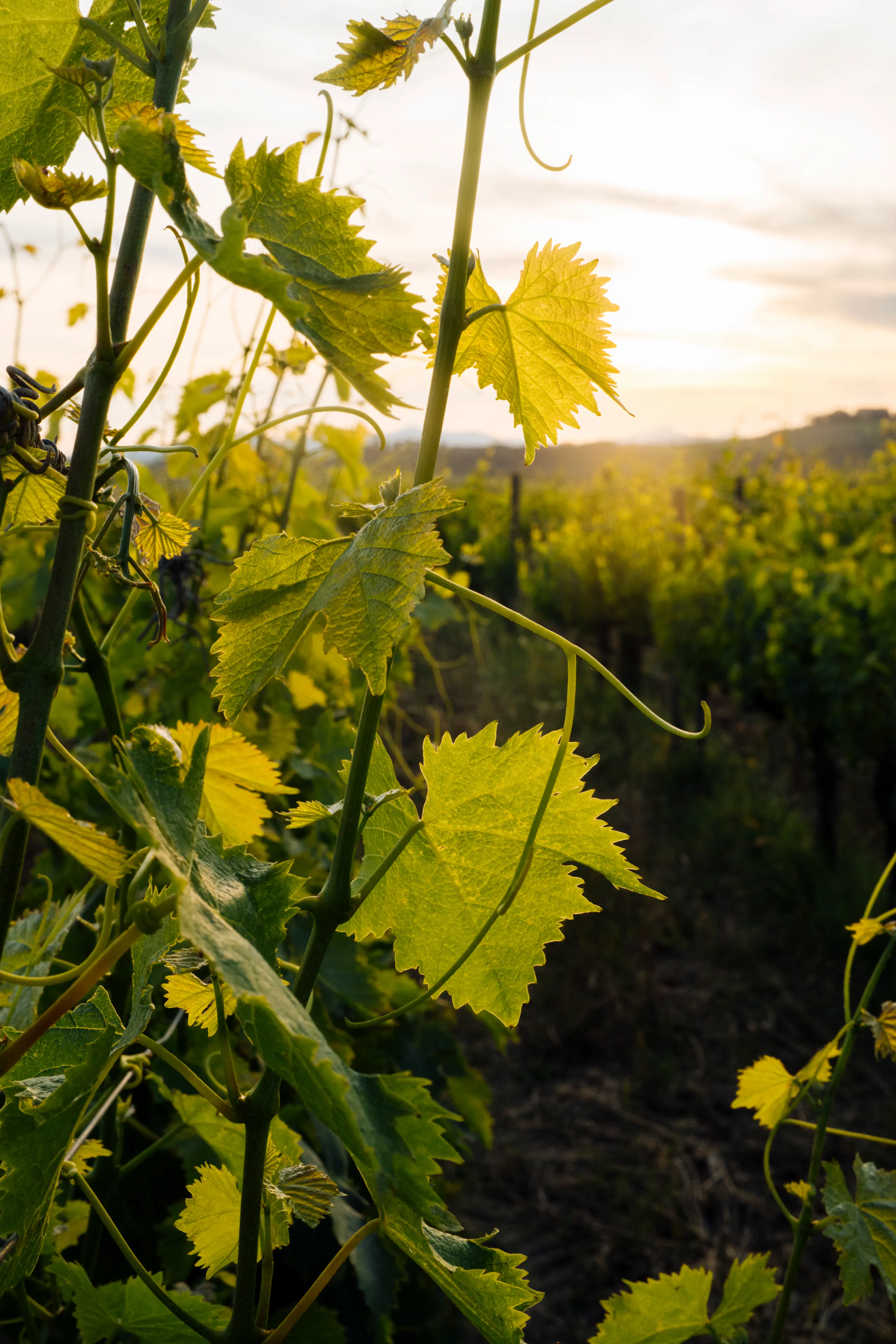
The management of the 150 hectares of vineyards follows the principles of organic viticulture, drawing on biodynamic practices. Compost is produced on the estate from manure and organic material, ranging from pruning residues to leaves. We use biodynamic preparations to support the vine’s physiology, as well as mulching techniques to retain soil moisture and encourage microbial life. Canopy management is essential for controlling the effects of sunlight and high temperatures, while carpeting responds to the need to preserve moisture and prevent soil erosion.
ORGANIC OASIS
Col d’Orcia has created its own natural water reserve, fed exclusively by rainwater, which plays an active role in shaping a microclimate from which many of the animals living in our oasis benefit: insects, amphibians, reptiles, and birds. These species were the focus of a census carried out in 2025, which recorded the presence of as many as nine species of conservation interest.
This vitality is also reflected in the soils, and the woodland plays an important role in the estate’s overall balance: rich in native plants—holm oaks, oaks, strawberry trees, and juniper—it is the natural habitat for the fauna of the Mediterranean scrubland and, by capturing large quantities of CO₂, it acts as a natural barrier between the estate and the outside environment.
POLYCULTURE
Col d’Orcia is the realm of polyculture which, by emulating a natural ecosystem, increases agricultural resilience, helping to control pests and weeds. It is an agronomic approach based on the simultaneous cultivation of multiple species, naturally opposing monoculture: vines, olive trees, arable crops—cereals, legumes, grasses—and fruit trees all tell the story of the rich varietal diversity of the Val d’Orcia.
With different inflorescences in every season, pollinating insects such as bees find shelter here; specific crops and green manures are dedicated to them, such as phacelia and Alexandrian clover.
TERRITORY
The estate extends across a single body of 520 hectares, on the southern slope of the Municipality of Montalcino, between 200 and 450 metres above sea level on the hill of Sant’Angelo—an area particularly favourable for sun exposure and protection from the harsher temperatures of nearby Monte Amiata. The Mediterranean climate and the proximity to the Tyrrhenian Sea allow for the gradual and complete ripening of the grapes, while the particular composition of the soil and the exposure of the vineyards confer upon Brunello unique characteristics in terms of structure and elegance.
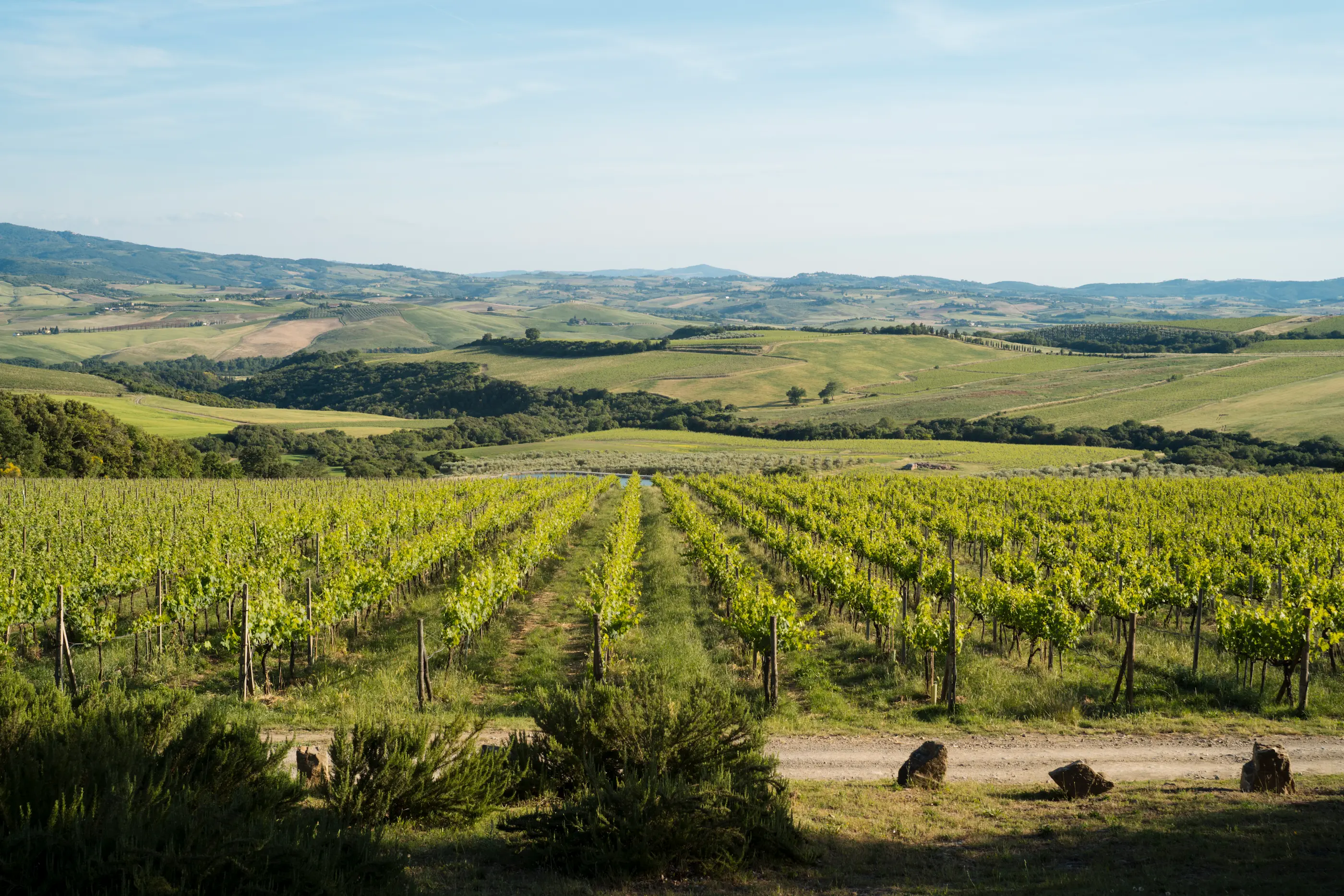
Col d’Orcia attributes paramount importance to the natural environment in which it operates, the respect of which lies at the heart of every decision. Here we present our practices and the results achieved year after year.

COL D'ORCIA S.r.l. Società Agricola
Via Giuncheti
53024 Montalcino - Italia


© Col d'Orcia 2012 - VAT: 00127660520 - SDI: T04ZHR3 - CIN: IT052037B5MXB3T7MF
COL D'ORCIA S.r.l. Società Agricola
Via Giuncheti
53024 Montalcino - Italia

© Col d'Orcia 2012 - VAT: 00127660520 - SDI: T04ZHR3 - CIN: IT052037B5MXB3T7MF


