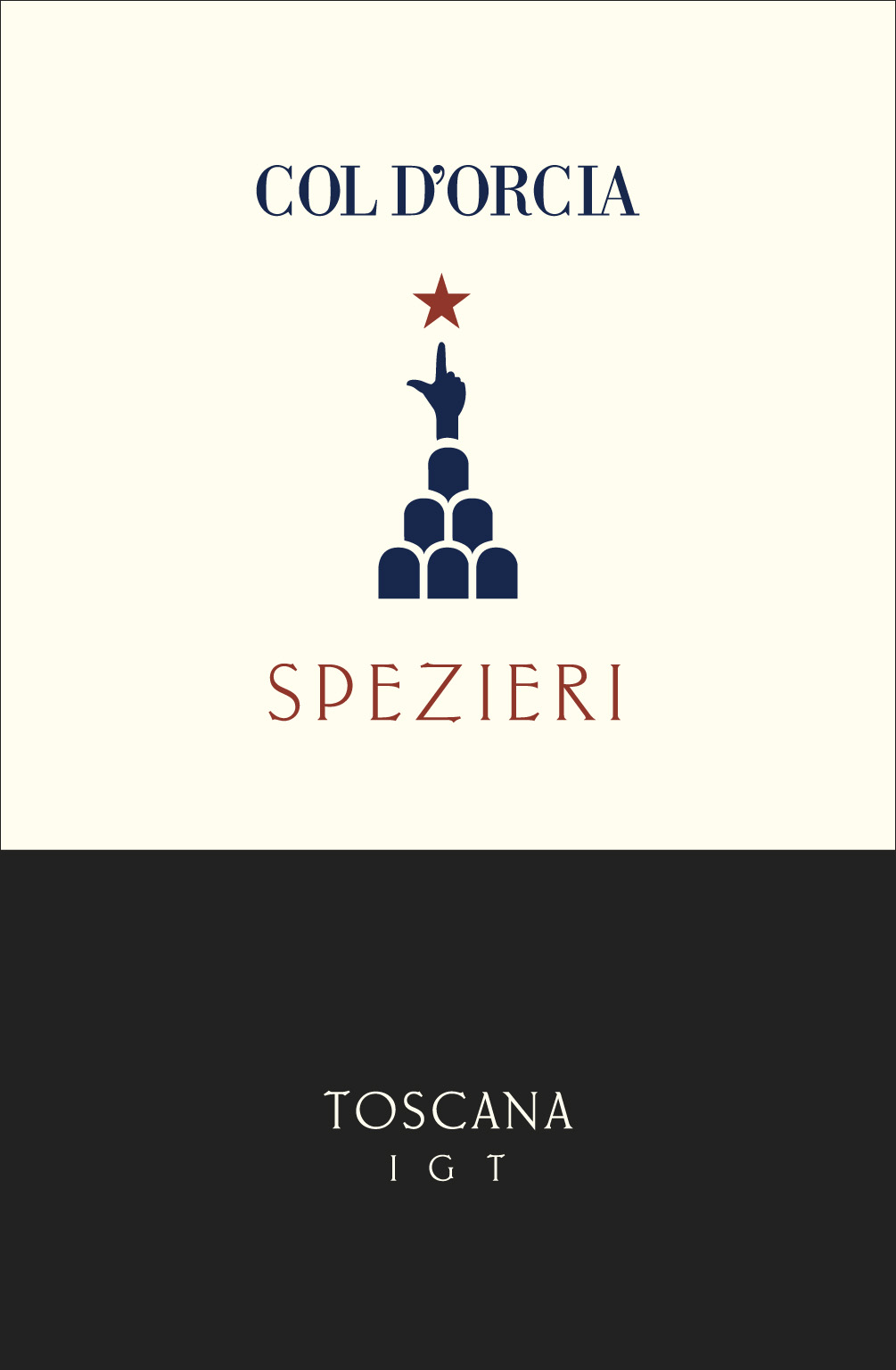
Spezieri is the only red wine from Col d’Orcia that sees no wood, only steel and concrete, made from two native grapes: Sangiovese and Ciliegiolo, a blending variety very common in Tuscany, which at Col d’Orcia covers just under two hectares.
It takes its name from the ancient art of the Spezieri who, in Renaissance Florence, traded and “blended” spices. Spezieri is a young, fruity, easy-drinking wine, intended for everyday meals. Thanks to its composition, it is highly versatile in food pairings; we also recommend trying it slightly chilled during the summer.
Lorem ipsum dolor sit amet, consectetur adipiscing elit. Suspendisse varius enim in eros elementum tristique. Duis cursus, mi quis viverra ornare, eros dolor interdum nulla, ut commodo diam libero vitae erat. Aenean faucibus nibh et justo cursus id rutrum lorem imperdiet. Nunc ut sem vitae risus tristique posuere.

A beneficial winter with abundant rainfall restored soil moisture levels to optimal conditions following the drought-affected 2012 vintage. Budbreak and flowering occurred within the typical timeframe of recent years, while the summer weather pattern, free from extreme conditions, was reminiscent of the more “traditional” vintages of the past.
Harvest began in the second half of September, supported by excellent day-to-night temperature variations and timely rainfall, which contributed to the balanced ripening of the grapes.
The winter was mild and rainy, with temperatures above the seasonal average. Between late spring and early summer, the vine’s vegetative cycle advanced ahead of schedule due to the intense and persistent rainfall recorded in June and July.
This was followed by a long period of sunny weather lasting until the second half of September, accompanied by moderate temperatures. The vintage produced wines with lower alcohol levels and a more elegant, refined structure.
Winter was relatively dry, with low temperatures recorded in January and February. Spring rainfall was in line with seasonal averages, allowing adequate water reserves to accumulate and support the vines through the hot months of July and August.
September was mild, with excellent diurnal temperature variation between day and night, favouring the perfect ripening of the grapes.
A mild winter led to an early start of the growing season, which was subsequently slowed by abundant spring rainfall, bringing vine development back to normal timing.
From the second half of June and throughout July, temperatures rose gradually and beneficially. August then brought significant day-to-night temperature variations and virtually no rainfall, creating ideal conditions for the perfect ripening of the grapes.
The 2017 growing season was marked by two key climate-change-related phenomena: drought and heatwaves. Rainfall was virtually absent from the end of 2016 onward, while summer temperatures remained consistently high.
The thunderstorm of August 13th, followed by a significant drop in nighttime temperatures, promoted the ripening of a limited crop yield. The result was exceptionally healthy grapes with remarkable aromatic complexity, elegant tannins, and excellent natural acidity.
Winter rains in the seasonal average with some snowfalls that helped compensate the water shortage in the soil. The beginning of the spring was mild with occasional rains. June and July were hot. Light and intermittent rains during the first three weeks of August with average temperatures of 25°C. During the first week of September the maximum temperature was 30°C. with some rainy days. The harvest started around mid September.
Winter rains in the seasonal average with some snowfalls during February that helped compensate for the water shortage in the soil. The beginning of the spring was mild with occasional rains. June and July were hot. The first three weeks of August were marked by intermittent light rains with average temperatures of 25°C. During the first week of September the maximum temperature was 30°C. with some rainy days. The harvest started around mid September.
The first part of winter was very rainy followed by low temperatures during the months of January and February and a light snowfall at the end of winter. Regular spring with rains and temperatures in the seasonal average. The beginning of summer was slightly rainy. Hot summer months, with some beneficial rainstorms at the end of August. In September the temperature difference between night and day facilitated the synthesis of the polyphenols, making the technological and phenolic ripeness of the grapes perfectly balanced, with a high aromatic component. 5 – star vintage.
The 2021 season was characterized by important weather events that reduced the production of Sangiovese by about 30% compared to a regular year. In particular, the frost of April 8 when the temperatures drop to -7 C° and the drought that began in June and lasted until the entire period of harvest – with little rainfall – causing the size and weight decrease of the grape. Thanks to the temperature changes in late August till the beginning of September, the grapes were in perfect health condition and has a remarkable concentration with positive aromatic component achieving a
perfect proportion between pulp and skin.
The budding took place at the end of the first week of April with a good fertility of the buds and a great number of potential bunches. April was mild with few rains like the whole first part of the spring. The temperatures from May to July were mainly above the seasonal average and caused the flowering of flowers with a lower development of the bunches making them smaller and sparse. Some rains arrived between the end of July and the middle of August, for a total quantity of 130 mm, causing a temperature decrease during the day and elevating the thermal excursions during the night. Therefore, during the following weeks the plants were able to rebalance the parameters of the grapes. The harvest was slightly anticipated at the beginning of September.
The budding took place during the second week of April which recorded the lowest temperature of the recent climate average with several rainy days. During May and June, the temperatures continued to be low with frequent rainy days. This widespread situation throughout the denomination has generated very strong downy mildew pressure which required frequent and punctual interventions. July, August and September were characterized by a regular course, with only a few days exceeding 34°C, ensuring perfect physiological functioning, without stress. The harvest began at the end of the first ten days of September and followed throughout the first week of October. The 2023 vintage is characterized more by aromatic complexity than by polyphenolic and alcoholic richness.
The 2024 vintage was characterised by a mild winter and an exceptionally wet spring, which encouraged vigorous vine growth while requiring careful vineyard management to maintain optimal vine health. From early summer onwards, weather conditions became progressively more stable, with rising temperatures and decreasing rainfall, providing favourable conditions for steady grape ripening.
Harvest took place under favourable weather conditions, allowing healthy, fully ripened grapes to be picked. For Sangiovese, the growing season resulted in an excellent balance between phenolic ripeness and freshness, producing wines of elegance, harmony and remarkable ageing potential.
The 2025 growing season was characterized by a cool, rainy spring, with no significant phytosanitary issues. At the end of June, temperatures approaching 40°C slowed berry growth, resulting in looser clusters. July was cooler and wetter, promoting rapid veraison and excellent phenolic and aromatic development. The heat peaks recorded in mid-August, followed by subsequent rainfall, did not compromise grape quality. The fruit reached optimal balance, with potential alcohol levels of around 14.5% in the red varieties and fully ripe tannins. Harvest began at the end of August for the white grapes and continued through the second half of September for the red varieties. The white wines display aromatic purity, attractive fruit character, and excellent balance. The reds—particularly Sangiovese—show remarkable structure, ripe tannins, freshness, and outstanding ageing potential.

COL D'ORCIA S.r.l. Società Agricola
Via Giuncheti
53024 Montalcino - Italia


© Col d'Orcia 2012 - VAT: 00127660520 - SDI: T04ZHR3 - CIN: IT052037B5MXB3T7MF